

We are qualified to speak about that which we have experienced, alchemized, and solidified into wisdom.
When we set out on the path of self-realization, we are, in a sense, raising our hand and volunteering for challenge. We are not simply bestowed with higher attainments in life without the matching lesson, which must be learned in one way or another. Trials reveal, build, and refine the deeper layers of the self. So when we inevitably encounter difficulty, we face a pivotal choice. We can allow the circumstance to exert its force upon us, shaping us according to its strength and our lack of awareness, or we can use awareness to bring the situation under conscious command. Through awareness, we become the one who shapes. This process of meeting the obstacle, studying its nature, and working our way through it is how we grow into the self-realized individual.
Living this process effectively consecrates our life’s purpose with the kiss of authenticity. Without this essential element, we risk the hollowness that leads to contrived expression and eventual loss of vitality. Authenticity is the byproduct of lived experience, and lived experience must be integrated before it can be transmitted. This “kiss” is the energetic imprint of a person’s completed alchemical processing. It quietly slips past the viewer or listener’s rational mind to press gently into the subconscious, where the body recognizes truth before the mind can interfere. The tonality of this messaging can be whisper-soft, yet devastatingly accurate.
An innate sense for proper timing is necessary here. When we release the energy of a lesson before it has been fully realized, we do not embody the wisdom, and so the kiss is not present. We must come to understand the difference between embodied action and empty movement. Although “busy work” is mostly empty, it can still teach structure and consistency to someone who hasn’t found their deeper direction. That discipline becomes meaningful and useful when it is paired with a clear sense of purpose.
This “kiss” is rare in the modern world, as many hurry to share their insights before the lessons have been fully integrated. There is a reason for this. The gaining of wisdom creates an inner pressure, and that pressure is necessary to transform a person. Yet it is this very same pressure that creates the urge to express through the throat before the lesson has risen to the higher centers of the body. This is a test of the aspirant’s purity and willpower. The question becomes: Do you wish to gain recognition/favor, or do you wish to gain knowledge? Choosing to prioritize the former over the latter will cause one to lose both – as the potency of the lesson is not preserved, and so the would-be wisdom is scattered to the wind.
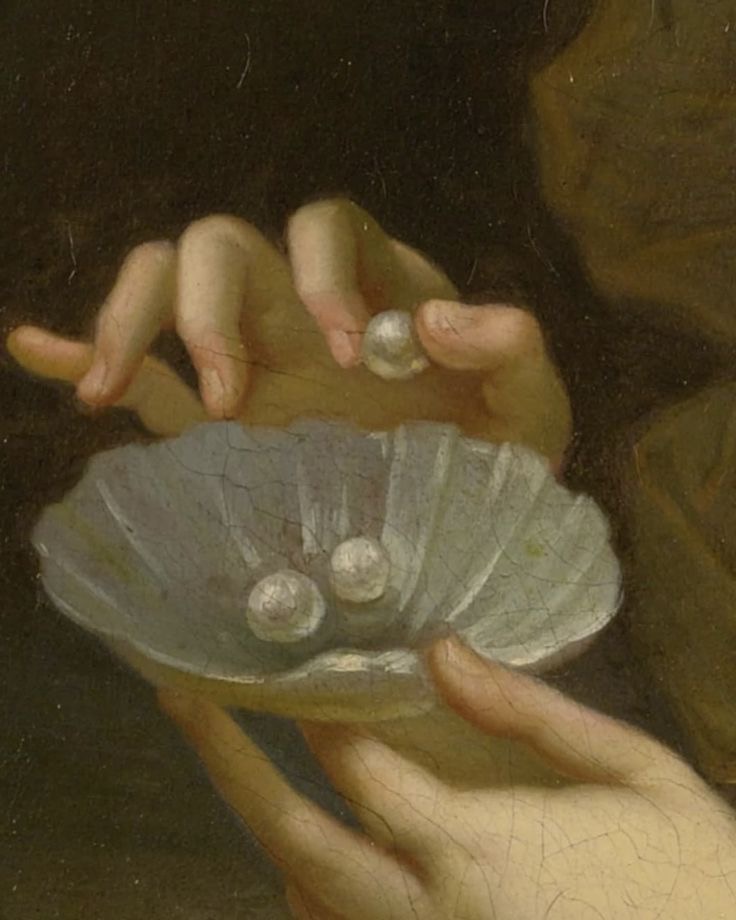
”Portrait of a Lady in Allegorical Guise, Holding a Dish of Pearls” by Pierre Mignard (17th century).
The utilization of proper timing grants the aspirant both the former and the latter. When we share work that has been kissed by authenticity, it is ultra-powerful and this exchange of distilled wisdom is one of the ways in which the human race evolves. This specific resonance within a message or creation is easy to recognize precisely because it is rare, like a pressure-formed jewel or pearl. This rarity is what gives rise to masterful literature, useful invention, legendary art, and powerful rhetoric. It reflects a refined dimension of the throat center: the precision of timing. Proper timing is neither late nor early—it is exactly “on time,” perfectly synchronized with both the Zeitgeist (the German word for “spirit of the time”) and the individual’s unique purpose. When this is cultivated to its highest expression, it can produce visionaries, capable leaders, and powerful speakers with the ability to shape collective reality.
With practice, we can become masterful in this distillation process. We create an inner environment that is prepared for it. Over time, we develop an intuitive sense for correct timing, and the more we engage with the process, the more familiar we become with the taste of truth. Through this, inner strength builds, and often the simple internal recognition of “not yet” is all we need. This willingness to wait displays true willpower and allows us to pass the “purity test” with increasing ease.

”Romeo and Juliet” by Frank Bernard Dicksee (1884).
Your message has been sent

 VALERIE CODY