The Legend is the Key

The legend is the key, and the key is the legend. 🗝️🗺️

Tradition gives us the legend; self-study gives us the key. Through introspection, we discover that just as the words legend and key are synonymous to the cartographer, they are likewise inseparable within the terrain of our inner world. Both guide us. Certain enduring legends (whether myth, holy scripture, or word-of-mouth lore) consistently point toward the same essential truth: the power that resides within us.

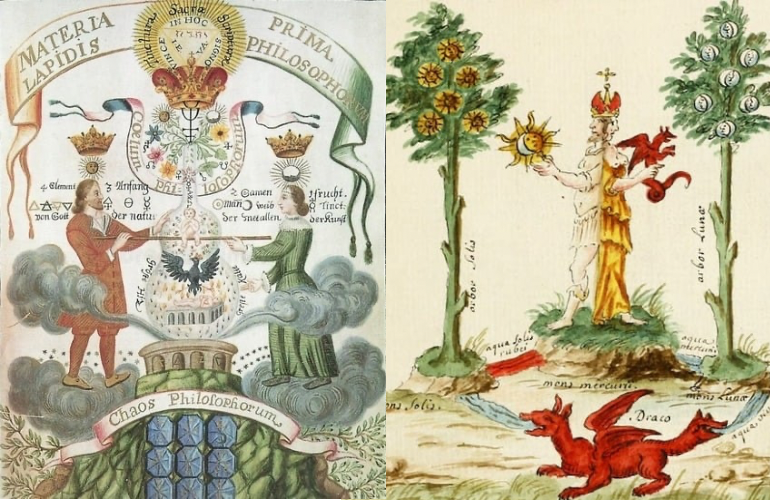
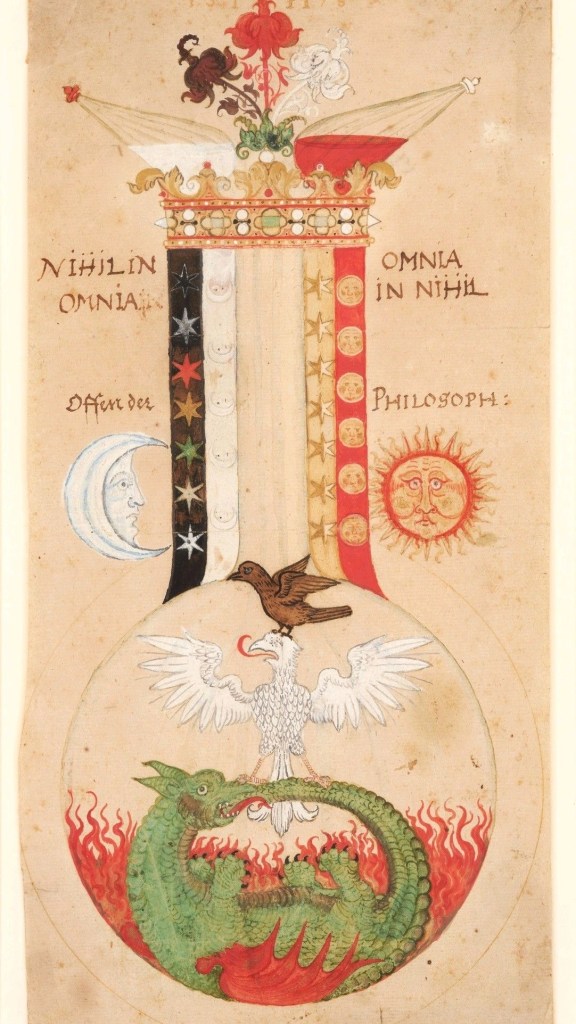
The reason these two are ultimately one and the same is because the key itself is what I will call the Eternal Legend. Once this reality is recognized, its fragments begin to align effortlessly with the allegories embedded in our time-tested myths. We can observe this, for example, in the ancient alchemical legend of “turning lead into gold.” Within this vast, intricate, and beautifully orchestrated narrative, the alchemical laboratory is the human body itself, and the beakers and chemical reactions symbolize internal processes of transformation. Each element within each legend functions as a key, revealing the Eternal Legend – ready to be accessed by the conscious and spiritually attuned individual. I wrote more explicitly about this Eternal Legend: here.

This process of extracting self-knowledge through archetypal depiction is delicate. It demands a rare pairing of both healthy skepticism and openness. In practice, this means cultivating the ability to test ideas in the physical realm without abandoning the inner one. We must avoid being enamored with the fairy tale while also refusing to throw “the baby out with the bathwater,” so to speak.

Some may linger too long in the waters of imagination and risk dissolving into self-created delusion. Others may under develop the capacity for openness and discard wisdom along with the myth. Inner refinement arises from holding both capacities simultaneously and in balance.

Consider the following enduring myths found across cultures:

  • King Arthur and the Twelve Knights of the Holy Grail
  • Jesus Christ and the Twelve Disciples
  • Hercules and his Twelve Labors
  • Odin and the Twelve Aesir
  • The Twelve Gods and Goddesses of Mount Olympus

The number twelve symbolizes wholeness, cycles of growth, and the integration of diverse energies into a unified whole. Each legend depicts a journey through these twelve forces, externalized as disciples, labors, or deities. Hidden within these narratives are the elements of the Eternal Legend: the path of self-mastery.
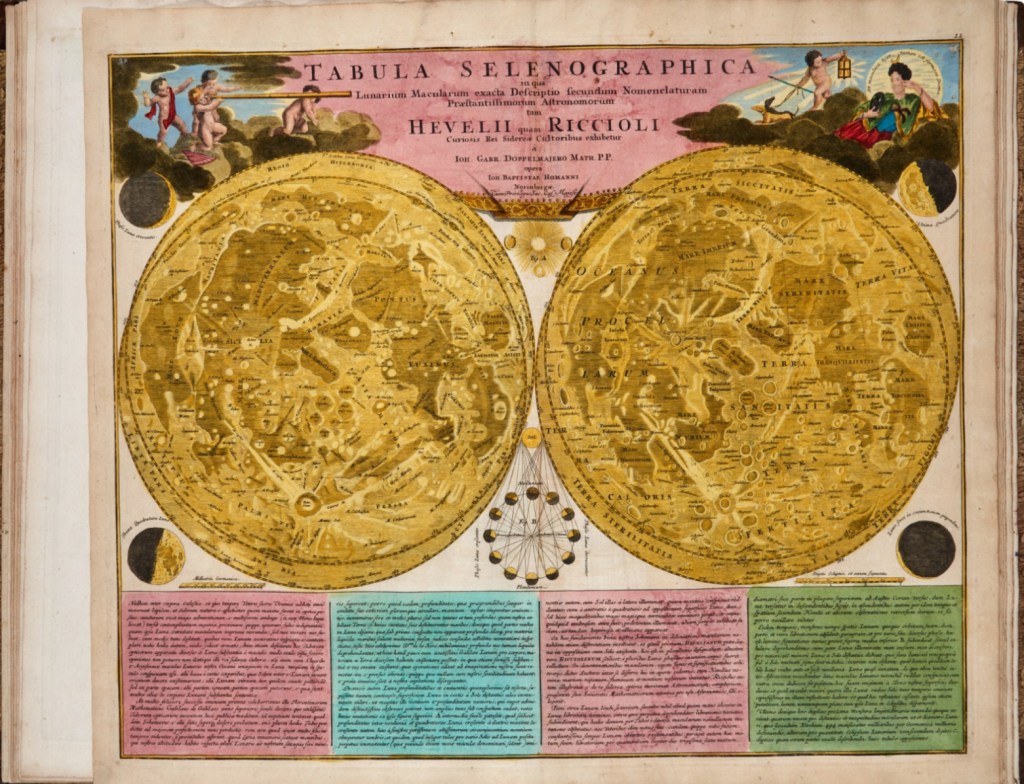
Doppelmayr | Novus atlas coelestis, Nuremberg, 1742 (photo by Sotheby’s)

Through careful concentration, self-discipline, and fidelity to a single path, we distill the key that unlocks all other legends. Once we grasp the Key of Truth, it fits any legend (lock) that contains the same truth. Truth is singular, geometric, and not subject to opinion. This is not “my truth” or “their truth”—it is the singular and everlasting Truth. This mindset must be applied rigorously, and we must continually align ourselves with it.

Once the key of internal knowing is grasped, the repeating pattern becomes unmistakable. These legends are variations of a single story, threaded through cultures and centuries. Engaging with them inwardly, especially the tradition that first cradled us at birth, offers our greatest opportunity for self-initiation into the Eternal Legend.

The mythology of religion and legend functions as a natural form of protection for the Eternal Legend. Those who mock these symbolic containers of wisdom reveal, almost immediately, their inability to engage with what lies beneath the surface. In this way, the profane exclude themselves by default, as the disposition required for deeper understanding has not yet been cultivated.

Likewise, those who approach these stories purely literally also bar themselves from their deeper truths. While learning through legend often begins in childhood, seeding the subconscious with principles meant to mature over time, true understanding requires a later unfolding. These truths are designed to blossom through lived experience, reflection, and inner inquiry.

When myth is clung to only at face value, we witness a consciousness that has not completed this maturation. It remains fixed at the threshold, unable to look directly into the myth itself and extract the carefully concealed key.

We must choose depth over breadth and mastery over superficiality. When we resist the tendency to be a “Jack of all trades, master of none,” we begin to touch the essence of enduring wisdom. This principle is why, a few years ago, I wrote an Instagram caption reflecting on a phrase from the Rosicrucian diagram Of God and Nature: “Whoever learns one, learns all. Whoever learns all, learns nothing.” That caption can be read: here.

To journey toward the Eternal Legend, we must become fluent in the language of symbology. The study of symbols is, in itself, an initiation. Through archetypes and symbols, we learn to see beyond surface interpretations and access the enduring truth within sacred texts. This capacity is only available to those who are unsatisfied with superficial understanding. Such dissatisfaction arises from an inner orientation toward truth, a discomfort in the presence of obscurity. This surfaces as curiosity and becomes the driving force of the search.

To move toward the Eternal Legend, we must stoke the inner fire. This fire is the spiritual energy that allows us to burn through the surface of outward teachings and reach the living spirit beneath them – beyond fable, beyond nursery-rhyme meaning. Once reached, the core does not burn. It glows.

Spiritual fire consumes what is illusory and extraneous, but it does not consume truth. Truth is not flammable; only what is superfluous, ephemeral, or fraudulent is reduced to ash. This is why focused attention (especially in the beginning) is essential when studying a spiritual tradition. Scattered attention produces only smoke and confusion. Focused attention, by contrast, becomes concentrated heat: a precise laser rather than a wildfire burning indiscriminately in all directions.

This fire becomes our own source of light, illuminating the paths we must traverse. It requires no borrowed flame; we carry it ourselves, using it to fuel and illuminate our own unique purpose.

The legend and the key are one. Myths are living templates of human experience, and the legend is unlocked from within. The stories of old serve as vessels of remembrance, revealing how we may consciously participate in the Eternal Legend. Through deep engagement, sustained focus, and the disciplines that refine us, we awaken to a simple and enduring truth: the power we seek outwardly has always resided within.
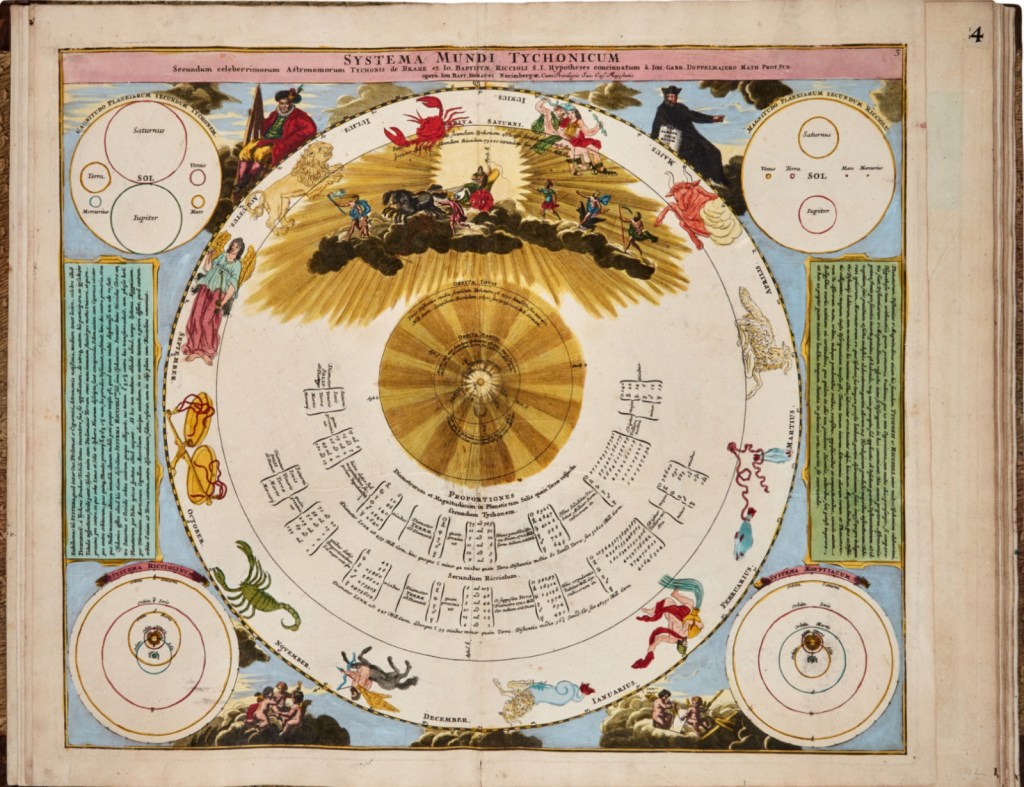
Doppelmayr | Novus atlas coelestis, Nuremberg, 1742 (photo by Sotheby’s)

The Kiss of the Authentic

We are qualified to speak about that which we have experienced, alchemized, and solidified into wisdom.

When we set out on the path of self-realization, we are, in a sense, raising our hand and volunteering for challenge. We are not simply bestowed with higher attainments in life without the matching lesson, which must be learned in one way or another. Trials reveal, build, and refine the deeper layers of the self. So when we inevitably encounter difficulty, we face a pivotal choice. We can allow the circumstance to exert its force upon us, shaping us according to its strength and our lack of awareness, or we can use awareness to bring the situation under conscious command. Through awareness, we become the one who shapes. This process of meeting the obstacle, studying its nature, and working our way through it is how we grow into the self-realized individual.

Living this process effectively consecrates our life’s purpose with the kiss of authenticity. Without this essential element, we risk the hollowness that leads to contrived expression and eventual loss of vitality. Authenticity is the byproduct of lived experience, and lived experience must be integrated before it can be transmitted. This “kiss” is the energetic imprint of a person’s completed alchemical processing. It quietly slips past the viewer or listener’s rational mind to press gently into the subconscious, where the body recognizes truth before the mind can interfere. The tonality of this messaging can be whisper-soft, yet devastatingly accurate.

An innate sense for proper timing is necessary here. When we release the energy of a lesson before it has been fully realized, we do not embody the wisdom, and so the kiss is not present. We must come to understand the difference between embodied action and empty movement. Although “busy work” is mostly empty, it can still teach structure and consistency to someone who hasn’t found their deeper direction. That discipline becomes meaningful and useful when it is paired with a clear sense of purpose.

This “kiss” is rare in the modern world, as many hurry to share their insights before the lessons have been fully integrated. There is a reason for this. The gaining of wisdom creates an inner pressure, and that pressure is necessary to transform a person. Yet it is this very same pressure that creates the urge to express through the throat before the lesson has risen to the higher centers of the body. This is a test of the aspirant’s purity and willpower. The question becomes: Do you wish to gain recognition/favor, or do you wish to gain knowledge? Choosing to prioritize the former over the latter will cause one to lose both – as the potency of the lesson is not preserved, and so the would-be wisdom is scattered to the wind.

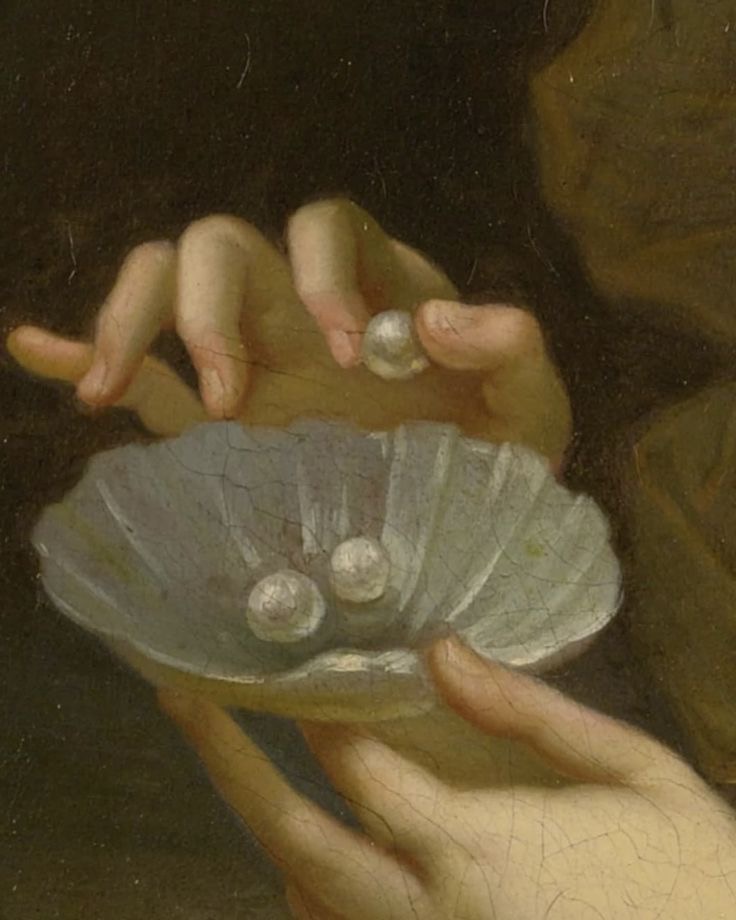
”Portrait of a Lady in Allegorical Guise, Holding a Dish of Pearls” by Pierre Mignard (17th century).

The utilization of proper timing grants the aspirant both the former and the latter. When we share work that has been kissed by authenticity, it is ultra-powerful and this exchange of distilled wisdom is one of the ways in which the human race evolves. This specific resonance within a message or creation is easy to recognize precisely because it is rare, like a pressure-formed jewel or pearl. This rarity is what gives rise to masterful literature, useful invention, legendary art, and powerful rhetoric. It reflects a refined dimension of the throat center: the precision of timing. Proper timing is neither late nor early—it is exactly “on time,” perfectly synchronized with both the Zeitgeist (the German word for “spirit of the time”) and the individual’s unique purpose. When this is cultivated to its highest expression, it can produce visionaries, capable leaders, and powerful speakers with the ability to shape collective reality.

With practice, we can become masterful in this distillation process. We create an inner environment that is prepared for it. Over time, we develop an intuitive sense for correct timing, and the more we engage with the process, the more familiar we become with the taste of truth. Through this, inner strength builds, and often the simple internal recognition of “not yet” is all we need. This willingness to wait displays true willpower and allows us to pass the “purity test” with increasing ease.

”Romeo and Juliet” by Frank Bernard Dicksee (1884).

Go back

Your message has been sent

Rating(required)
Warning

🧶The Entwining of Consciousness

A diptych is a two-sided altarpiece. One side depicts a deity or sacred scene, the other presents something more earthly, such as a self-portrait, an ancestor, or an influential figure like a patriarch or monarch.  The two panels are bound together by a hinge or spine, much like a book or a locket. Historically, diptychs (unlike the larger triptychs used for liturgical altars) were placed upon personal shrines within the home. During the late Medieval Ages and the early Renaissance era especially, commissioning a “donor portrait” diptych was common. These works of art represent, whether consciously or subconsciously, the seeker’s desire to fuse with the Divine. 


The Wilton Diptych, c. 1395-1399, displayed at the National Gallery in London. Commissioned by and depicting King Richard the 2nd on the left, and the Virgin with Child on the right.

The hinge of the diptych is both utilitarian and symbolic. Outwardly it’s just a joint, but symbolically it represents the “axis mundi.” It is the same motif we see in myths of a central pillar where heaven and earth meet. Specifically, I will be exploring the Nordic myth of Odin and the tree Yggdrasil below. In esoteric anatomy, this axis is the human spine: The subtle corridor where instinct can be transformed into insight and the Divine descends into form.

Placing a diptych on an altar is a physical reenactment of an inner reality. One side shows the Divine, the other the human, and the hinge becomes the meeting-point between them. It is the place where consciousness can move upward or downward without severing itself from the body. Like the nervous system itself, the “hinge” keeps us anchored while we reach upward. It prevents the seeker from dissolving entirely into transcendence, and instead supports the weaving of the heavenly and the earthly. The diptych becomes a symbolic mirror of this inner ascent, showing how human consciousness joins with Divine consciousness through a shared axis. This movement is an internal anointing: a rising, consecrating current within the subtle body.

Exoteric religions echo this inner process through outward sacraments. In Catholicism, a consecrated oil is placed on the forehead of worshippers as a sign of blessing. This is a symbolic reflection of an esoteric secret that happens within. The “inner oil” is a subtle essence recognized across spiritual traditions, it gathers and rises through the spinal channel, enlivening centers of perception as it ascends.

Even the Catholic term “chrism” reveals this esoteric heritage: it is related to Christos, “the anointed one,” and literally translates to “oil.” What is enacted externally as ritual anointing is a representation of the inner refinement and elevation of one’s own subtle essence.

 It is the sacred elixir:

  • the milk-and-honey fluid of the mystics
  • the Shekhinah descending and rising
  • the serpent-fire of the yogis
  • the pneuma carried up the ladder of Jacob’s dream

As the internal chrism rises, it anoints the brain (the inner temple) and opens the higher centers of vision and gnosis. This is how the seeker moves from belief to knowledge, from worship to union. Thus, the spine is the metaphysical hinge through which human consciousness weaves itself with Divine Will.

This ascent is the basis of many mythological journeys. For example, in the Nordic myth of Odin and Yggdrasil, Odin sacrifices himself by hanging himself upside down on the tree (named Yggdrasil) for nine nights. He does this so that he may gain the knowledge of the Nordic Runes. The understanding is that in order to properly intuit Divine knowledge (rather than be spun off into delusion), one must purify themselves. This myth is a good example of the internal annointing because Odin is hanging upside down, which mimicks the act of raising of the inner chrism.

The “Ascent Myth” follows this pattern:

  1. A lower world: Ordinary consciousness, instinct, matter
  2. A middle journey: Trials, purification, initiation
  3. A pinnacle or summit: Revelation, union with the divine
  4. A return: The enlightened hero re-enters the world transformed

This motif mirrors the movement of energy up the spine, from lower instincts to higher perception and finally to Divine union. The spine has 33 embryonic vertebrae, which alludes to why this number is used in certain fraternities to denote a “rise” in rank amongst one’s fellows.

The Feminine and The Masculine

Although the ascent of the chrism is a universal mechanism, the masculine and feminine bodies conduct this ascent in different ways. These differences are not oppositional but complementary expressions of the same spiritual physics. This is why we see symbolism in the form of the sun/moon or fire/water. 

In the masculine form, the generative essence gathers like pressure. It behaves alchemically like steam building within a sealed vessel: focused, upward-driving, and linear. This is why Hermetic texts describe the masculine path as the “fire rising.” It is the solar current that pushes toward illumination through intensity and disciplined direction. When conserved and sublimated, this pressure moves through the spinal axis as a concentrated surge. 

In the feminine form, the same essence does not accumulate as pressure but diffuses as luminosity. It spreads through the subtle body like light filling a chamber, illuminating her inner space before rising higher. The feminine stores life‑force in a more distributed, oceanic way; therefore, her spiritual ascent is not a push but a glow. It brightens the womb, the heart, and the imaginal centers before lifting toward the crown. The internal tide of intuition rises not through force but through fullness. Women are inherently generative and naturally retain more essence; because of this, she can often achieve this ascent without the same strict conservation required of a male aspirant. The ascent can feel spontaneous, almost trancelike, as she channels connections, ideas, or inspiration for art and poetry (her unique interests are a reflection of her own personal essence, genetic inheritances, and Will) — manifesting works that seem to emerge from a source larger than herself, flowing naturally from the wellspring of her preserved essence.

When this life-force is preserved (through purity of input, rest, love, intention, lowered overstimulation), its substance becomes the raw material of inspiration itself. It refines into completely unique ideas, concepts, inventions, and art. These creations are as singular and unique as a fingerprint. This is because the same generative essence that produces physical life (via pregnancy), when redirected inward, produces physical rejuvenation, as well as psychicintellectual, and spiritual life. The life-giving essence is the same; only the direction changes. 

The diptych is a medieval spiritual device and its impact depends on how it is used. Through spiritual fidelity and consistency, we invite the Divine to enter and reshape our awareness. With pure intention, even the most modest object can reveal profound treasures to the worthy, truth-loving aspirant. When regarded merely as decoration, it may yield only ephemeral wisps of wisdom. When viewed as a symbol of our desire to weave our consciousness with the Divine, the diptych can inspire devotion to our internal ascent.

A page from the Aurora Consurgens, a Medieval alchemical manuscript. It uses visual symbolism to convey this mystery.

Go back

Your message has been sent

Rating(required)
Warning

🍦On the Development of Good Taste

The following is the extended version of a caption I posted on Instagram today. There is a character limit on that platform and I had to omit some of the original text. Find it in totality below:

“Good taste” emerges from the two foundational qualities of discernment and aesthetic judgment. These qualities simultaneously sharpen the eye and refine the spirit. Through them, beauty becomes something we can learn to recognize rather than something we merely prefer and call “personal preference.” To gain aesthetic intelligence, we study both symmetry and anomaly in order to achieve a sense of context. Knowledge of symmetry allows one to recognize when something is out of alignment. Knowledge of anomaly helps one identify exactly what is out of place. Symmetry is a matter of mathematical proportion and is the physical representation of universal truth. For this reason, symmetry creates objective beauty. Humanity introduces deviation. Emotion introduces asymmetry. Evolution introduces variation. If we want to understand symmetry as Divine truth, we look to the Renaissance Masters and classical architecture. If we seek emotion, imagination or subjectivity, we look to modern art. This is why, on page 91 of my poetry book Slow Motion, I wrote, “Don’t look at modern art.” It was a playful exaggeration expressing this idea. I have shared this poem here:

Don’t glorify the future
Don’t look at modern art
The techniques of the masters, learn them by heart
Renaissance works still stand when pulled apart

Use the past for a proper frame of reference
Not these confounding scribbles on a digital canvas
Only a return to the truth can save us

Goddess, save the art world
God, save us from the screen
-art save the artist from the modernity scheme


In ancient times, symmetrical art and architecture were understood as a form of medicine. To gaze upon perfected form was considered therapeutic, a way of restoring inner harmony through outer harmony. Today, we readily accept that sound can heal—hymns, chants, certain frequencies, binaural tones—yet we have largely forgotten the healing power of symmetry itself. We recognize vibrational medicine in music but overlook the mathematics of beauty as a parallel form of spiritual alignment.

This is distinctly different from what many describe as “healing” through splattering paint or releasing emotion onto a canvas. Such methods are practices of emotional transmutation, valid in their own category, but unrelated to what I am referring to. What I am pointing to is the quiet, corrective effect of merely beholding art or architecture that carries divine proportion. Modern art, with its emphasis on emotion, spontaneity, and imprecision, serves a different function entirely.


⚖️ The first step in cultivating good taste is to immerse the mind in symmetrical perfection. Discernment then develops as an internal system of metrics, created through observation and reflection. This internal vetting naturally shapes our aesthetic judgment. It becomes a silent instrument of measure. Once this instrument awakens, we begin to recognize mathematical cohesion immediately, and a taste for this recognition emerges. What reflects proportion reflects truth, and those who are aligned with this truth instinctively resonate with it. This is why the word “integrity” refers both to structural soundness and to alignment with truth. And why the word “sound” itself is used to describe a “state of being in good condition, the quality of being based on valid reason or good judgment” and also “vibrations that travel through the air and can be heard once they reach the ear.

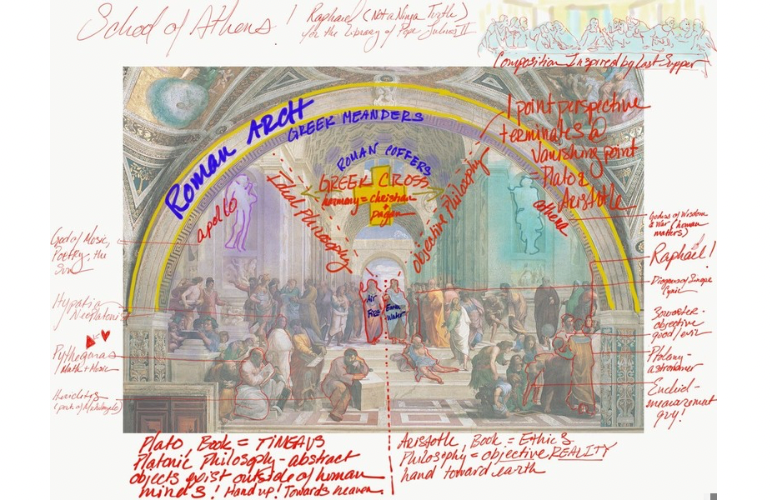
Integrity, proportion, and beauty mirror a metaphysical pattern, the Platonic Form of order that underlies both art and existence. This connection alludes to the mysteries of fraternal societies that symbolically use the jargon of masonry to guide spiritual initiates. 🛠️


“Pattern” is the directive masculine principle, and matter itself is the receptive feminine principle. To quote Goethe, who said, “Architecture is frozen music,” vibration becomes form when pattern impresses itself upon matter, translating harmony into geometric structure. The masculine embodies, enacts, and impresses the pattern. The feminine is the substance upon which the pattern is received and revealed. The word “pattern” is etymologically rooted in “pater,” or father/patron/protector, while “matter” is rooted in “mater,” or mother/material/matrix. The word “matrix” literally translating to “womb” or “breeding female.” The interaction of pattern and matter reflects the sacred act of creation. To develop good taste is to consciously participate in this mystery, to train the senses toward the architecture of the Divine. 

Go back

Your message has been sent

Rating(required)
Warning