🕰️The Sacred Art of Time-Keeping

The documenting of the passage of time is one of the most intricate and important of the ancient mysteries. This is due to the fact that methods of keeping rhythmic and cyclical time over large spans such as centuries and millennia were esoteric practices neither meant for nor shared with the masses. These were “behind the scenes” actions that informed outward practices such as yearly religious rites – but the calculation, formulation, and dispensation of time-keeping was implemented by the ruling classes.

The ruling classes set the calendar year after year, as seen in the creation of tools such as the Gregorian and Julian calendars. We see interest-piquing nuances such as leap year and the beginning of the calendar year falling in winter rather than spring, as nature would dictate. When we peer, even for a moment, into these oddities, the mysteries of time-keeping begin to reveal themselves to the curious and spiritually minded individual.

However, these truths were not meant to be observed or examined by the commoner. They were meant to be blindly celebrated in public mass rituals so that certain traditions, especially agricultural ones, could be maintained. Such as the celebration of the ancient Roman holiday of Ceraelia in the spring, which denoted it was time to plant seeds in the ground. If seeds were not planted at the correct time, the harvest would not beat the frost in later months, and the food supply would be shortened. Thus, it was in the interest of the time-keepers to let the masses in on certain mysteries that ultimately benefited the aristocracy.

In Greek thought, primordial time was personified as the figure Chronos, from which we get the term chronological, meaning “of a record of events starting with the earliest and following the order in which they occurred.” This figure, Chronos, emerges at the beginning of all things, pre-dating calendars and even pre-dating seasons and agriculture. In later philosophical and symbolic traditions, Chronos becomes intertwined with the Titan Kronos and is depicted as devouring all things, a symbolic expression of the idea that nothing escapes duration. Everything that arises within time is eventually dissolved by it. The image of time consuming its own creations reflects an ancient recognition that creation and decay are inseparable. Time gives form, and time reclaims it.

As this lineage moved forward into the modern world, time was increasingly abstracted and compressed into mechanical measurement. Clock time became a regulated system of hours and minutes, severed from celestial observation and seasonal rhythm. What was once an intimate relationship with cycles of growth, decay, and return became a quantified structure imposed upon daily life. In this way, modern clock time can be understood as a spiritual narrowing of Chronos, a reduction of infinite duration into manageable units, useful for organization, yet often disconnected from the deeper rhythms that once governed human life.

Divine timing is perfect, but our human methods are simply a workaround to understand the cycles of the divine, which we attempt to quantify as time. Our methods are imperfect. This is why we have leap years, daylight savings time, and why ruling entities of the past such as Pope Gregory XIII and Julius Caesar introduced certain calendars, the Gregorian and the Julian, respectively.

The Julian Calendar was an imperial time-keeping tool introduced by Julius Caesar in 45 BCE. This is a solar calendar, which would not surprise anyone who has realized that the Bible itself is a solar book, keeping the cycles and mythologies of the sun, humanized for mythological reasons as a “son of God.” This calendar was a way to impose order, unity of expectations, and ultimately control upon the growing Roman Empire.

The core features of this calendar were a 365 day cycle with holy days, shortened to the colloquial word “holidays,” celebrated at astrological and astronomical points, and a leap year that added an extra day every four years.

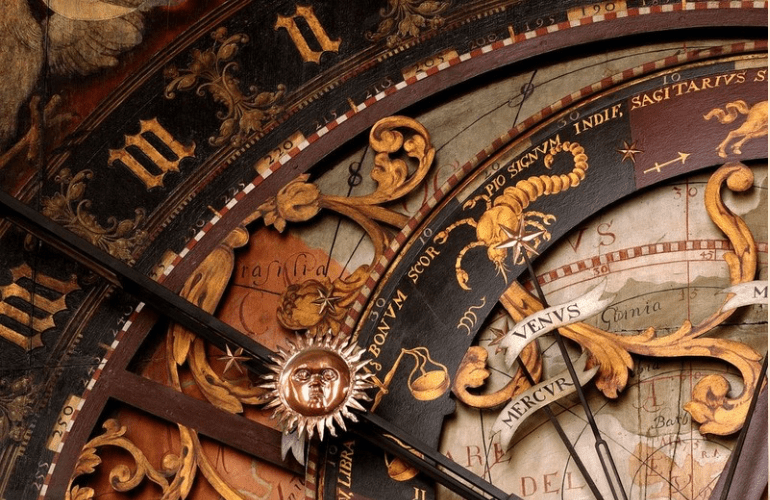
To fully understand the reasoning behind this solar time-keeping method, one must understand the apparent path of the sun’s yearly cycle. In our modern era, the twelve signs of the zodiac have been mocked into the ground. They have been bastardized and ridiculed by the masses to the point of extreme parody at best, and demonized (literally) by the church itself – even though the church’s actual mechanism of keeping its sacred holidays such as Easter and Christmas is astronomical and astrological in nature.

The sun takes 365.2422 days to complete its yearly cycle around the ecliptic. The ecliptic is the band of twelve constellations that make up the zodiac wheel and are marked through the months of the year. This emphasis on twelve appears repeatedly in myth, a theme explored in my post on the Eternal Legend: here. This is known as the solar year and is what modern calendars use to track time, with the sun as the marker. Keep in mind that while we are using Earth’s relationship to this particular luminary – other planets mark time in their own cycles, which is why we observe astronomical phenomena such as retrogrades and “returns.” Again, the ruling classes rely on the social degradation of these very real events to keep the masses from understanding the underlying cycles that govern physical reality.

Back to the Julian Calendar.

Because this precise decimal calculation needed to be rounded so it could be applied to daily life, this calendar settled on a fixed point of 365.25 days in a solar year. This minute inaccuracy accumulated, and the calendar became imperfect to the point of outward flaw. It was off by one full day every 128 years.

Enter Pope Gregory XIII in 1582 with the Gregorian Calendar, which is still in use today.

If we look carefully here, two secrets are revealed at once. First, the tracking of time is controlled by the aristocracy, papacy, and emperors via royal decree. Second, and most importantly, religious holy days are astronomical and astrological.

By 1582, the pope and religious authorities recognized that the holiday commemorating their risen savior, Easter, had drifted about ten days from its original equinoctial set point. This was due to the imperfection of the Julian Calendar and its accumulated error. As a correction, ten days were skipped and leap years became more selective, and so the Gregorian Calendar was imposed upon society.

The church saw it as critically important to ensure that Easter remained aligned with its astronomical markers, which are: the first Sunday after the first full moon following the spring equinox. This alone should prompt the serious truth seeker to look further into the mysteries of religion. If the rising of a dead savior occurred on a specific day, celestial positioning should be irrelevant, and yet it is not. A scholarly and inquisitive examination of Christian holidays reveals the astronomical and astrological foundations beneath the myths of the church.

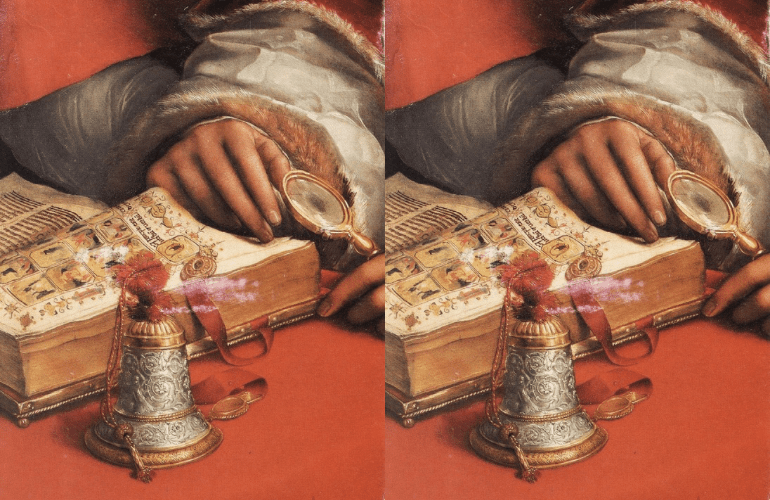
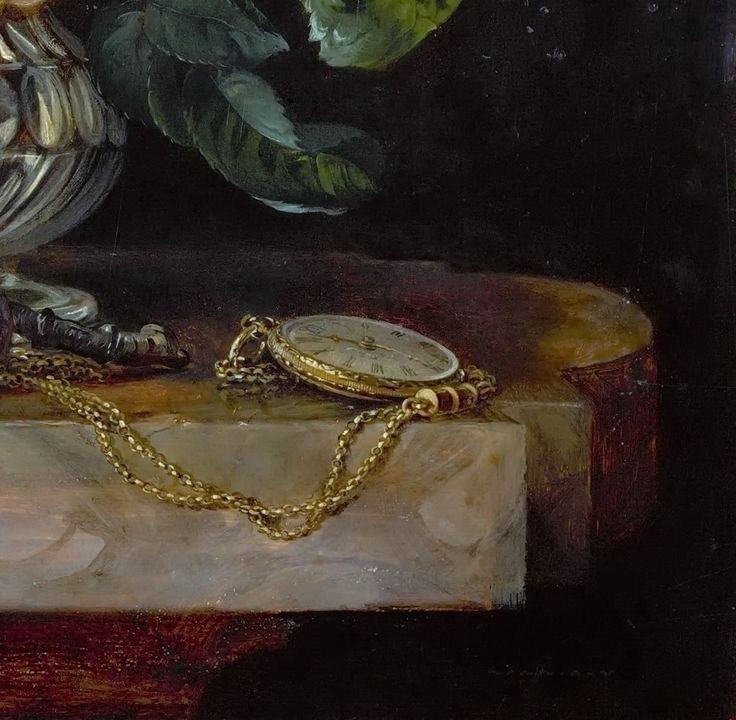
The idea that masterful astronomical time-keeping functioned as an arm of the elite is still intact today. We can observe this subtly through the emphasis on expensive timepieces as status symbols. This very real signification extends further to considering that one of the richest men on the planet, Jeff Bezos, is funding a forty-two million dollar monolithic clock in the Sierra Diablo mountain range in West Texas known as the 10,000 Year Clock.

The tracking and control of the collective perception of time has historically been the realm of the elite, but this does not mean that everyone must remain within its grip. Through contemplation and understanding, one can transcend these imposed frameworks. With a sincere connection to inner truth, we may orient ourselves into a more conscious relationship with time, which should be a goal of every true and meaningful spiritual practice.
Go back

Your message has been sent
Rating(required)
Warning

The Legend is the Key

The legend is the key, and the key is the legend. 🗝️🗺️

Tradition gives us the legend; self-study gives us the key. Through introspection, we discover that just as the words legend and key are synonymous to the cartographer, they are likewise inseparable within the terrain of our inner world. Both guide us. Certain enduring legends (whether myth, holy scripture, or word-of-mouth lore) consistently point toward the same essential truth: the power that resides within us.

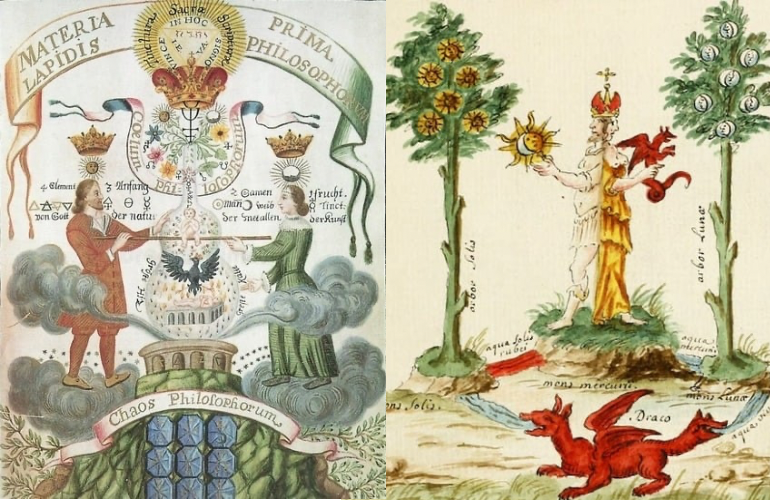
The reason these two are ultimately one and the same is because the key itself is what I will call the Eternal Legend. Once this reality is recognized, its fragments begin to align effortlessly with the allegories embedded in our time-tested myths. We can observe this, for example, in the ancient alchemical legend of “turning lead into gold.” Within this vast, intricate, and beautifully orchestrated narrative, the alchemical laboratory is the human body itself, and the beakers and chemical reactions symbolize internal processes of transformation. Each element within each legend functions as a key, revealing the Eternal Legend – ready to be accessed by the conscious and spiritually attuned individual. I wrote more explicitly about this Eternal Legend: here.

This process of extracting self-knowledge through archetypal depiction is delicate. It demands a rare pairing of both healthy skepticism and openness. In practice, this means cultivating the ability to test ideas in the physical realm without abandoning the inner one. We must avoid being enamored with the fairy tale while also refusing to throw “the baby out with the bathwater,” so to speak.

Some may linger too long in the waters of imagination and risk dissolving into self-created delusion. Others may under develop the capacity for openness and discard wisdom along with the myth. Inner refinement arises from holding both capacities simultaneously and in balance.

Consider the following enduring myths found across cultures:

  • King Arthur and the Twelve Knights of the Holy Grail
  • Jesus Christ and the Twelve Disciples
  • Hercules and his Twelve Labors
  • Odin and the Twelve Aesir
  • The Twelve Gods and Goddesses of Mount Olympus

The number twelve symbolizes wholeness, cycles of growth, and the integration of diverse energies into a unified whole. Each legend depicts a journey through these twelve forces, externalized as disciples, labors, or deities. Hidden within these narratives are the elements of the Eternal Legend: the path of self-mastery.

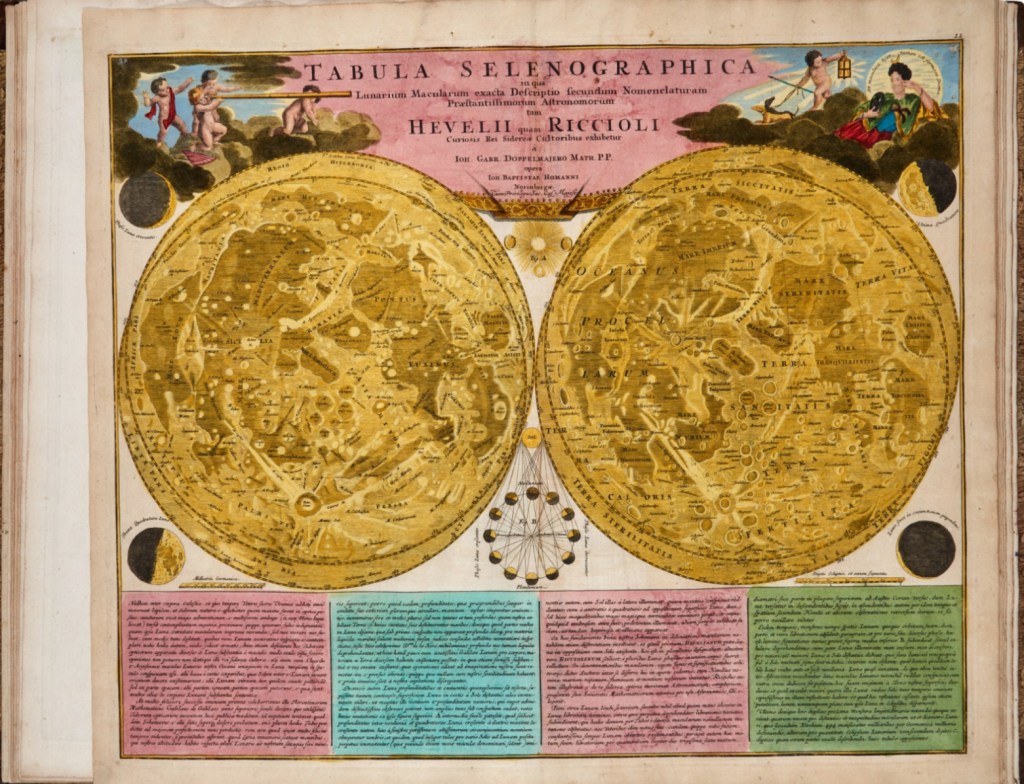
Doppelmayr | Novus atlas coelestis, Nuremberg, 1742 (photo by Sotheby’s)

Through careful concentration, self-discipline, and fidelity to a single path, we distill the key that unlocks all other legends. Once we grasp the Key of Truth, it fits any legend (lock) that contains the same truth. Truth is singular, geometric, and not subject to opinion. This is not “my truth” or “their truth”—it is the singular and everlasting Truth. This mindset must be applied rigorously, and we must continually align ourselves with it.

Once the key of internal knowing is grasped, the repeating pattern becomes unmistakable. These legends are variations of a single story, threaded through cultures and centuries. Engaging with them inwardly, especially the tradition that first cradled us at birth, offers our greatest opportunity for self-initiation into the Eternal Legend.

The mythology of religion and legend functions as a natural form of protection for the Eternal Legend. Those who mock these symbolic containers of wisdom reveal, almost immediately, their inability to engage with what lies beneath the surface. In this way, the profane exclude themselves by default, as the disposition required for deeper understanding has not yet been cultivated.

Likewise, those who approach these stories purely literally also bar themselves from their deeper truths. While learning through legend often begins in childhood, seeding the subconscious with principles meant to mature over time, true understanding requires a later unfolding. These truths are designed to blossom through lived experience, reflection, and inner inquiry.

When myth is clung to only at face value, we witness a consciousness that has not completed this maturation. It remains fixed at the threshold, unable to look directly into the myth itself and extract the carefully concealed key.

We must choose depth over breadth and mastery over superficiality. When we resist the tendency to be a “Jack of all trades, master of none,” we begin to touch the essence of enduring wisdom. This principle is why, a few years ago, I wrote an Instagram caption reflecting on a phrase from the Rosicrucian diagram Of God and Nature: “Whoever learns one, learns all. Whoever learns all, learns nothing.” That caption can be read: here.

To journey toward the Eternal Legend, we must become fluent in the language of symbology. The study of symbols is, in itself, an initiation. Through archetypes and symbols, we learn to see beyond surface interpretations and access the enduring truth within sacred texts. This capacity is only available to those who are unsatisfied with superficial understanding. Such dissatisfaction arises from an inner orientation toward truth, a discomfort in the presence of obscurity. This surfaces as curiosity and becomes the driving force of the search.

To move toward the Eternal Legend, we must stoke the inner fire. This fire is the spiritual energy that allows us to burn through the surface of outward teachings and reach the living spirit beneath them – beyond fable, beyond nursery-rhyme meaning. Once reached, the core does not burn. It glows.

Spiritual fire consumes what is illusory and extraneous, but it does not consume truth. Truth is not flammable; only what is superfluous, ephemeral, or fraudulent is reduced to ash. This is why focused attention (especially in the beginning) is essential when studying a spiritual tradition. Scattered attention produces only smoke and confusion. Focused attention, by contrast, becomes concentrated heat: a precise laser rather than a wildfire burning indiscriminately in all directions.

This fire becomes our own source of light, illuminating the paths we must traverse. It requires no borrowed flame; we carry it ourselves, using it to fuel and illuminate our own unique purpose.

The legend and the key are one. Myths are living templates of human experience, and the legend is unlocked from within. The stories of old serve as vessels of remembrance, revealing how we may consciously participate in the Eternal Legend. Through deep engagement, sustained focus, and the disciplines that refine us, we awaken to a simple and enduring truth: the power we seek outwardly has always resided within.

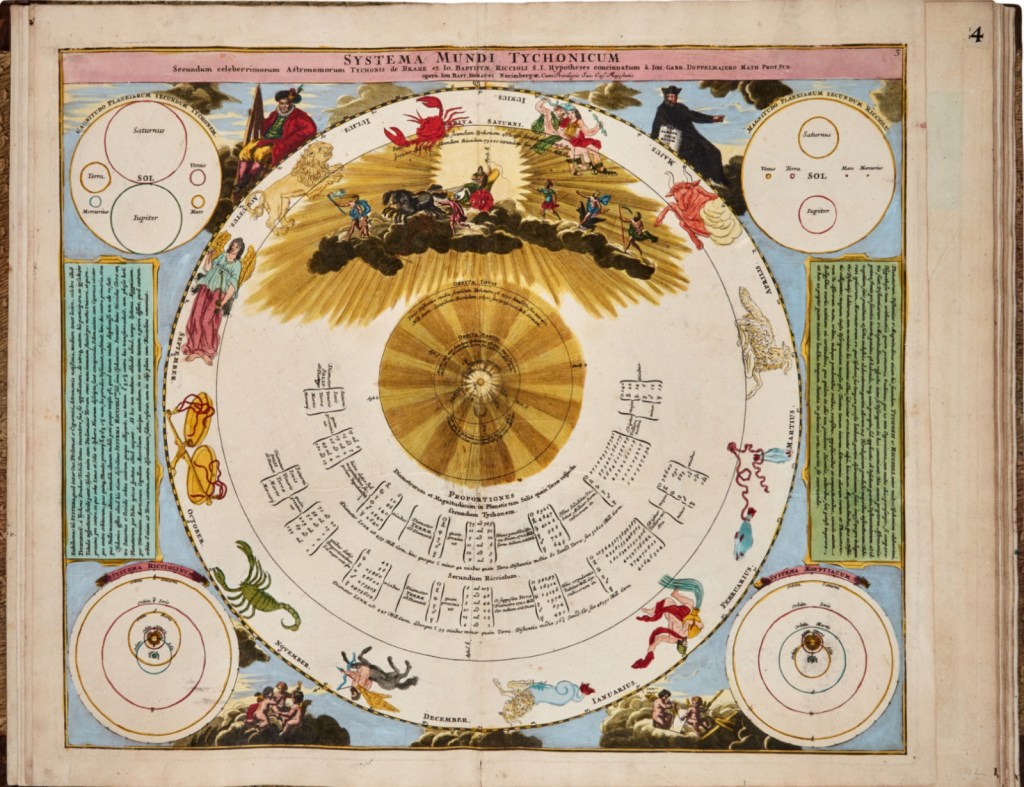
Doppelmayr | Novus atlas coelestis, Nuremberg, 1742 (photo by Sotheby’s)

🃏House of Cards or Holy Temple?

As we work with our earthly forms, we should ask ourselves: Are we building a house of cards, or a Holy Temple?

The House of Cards
A house of cards forms when we build our lives, our worldview, our spiritual practice, or even our bodies without first anchoring ourselves in truth. The unsteady “house of cards” metaphor reveals the inherent instability we risk when basing ourselves on anything other than alignment with Universal Truth and our individual purified will.

This unstable foundation may have an outward veneer that attracts interest or attention, but when we walk up to it, even the light tread of our slippered feet may be enough to shake it to the ground. This structure relies on sleight of hand, on smoke and mirrors that divert us from noticing its deformed fragility. Those who are drawn to them are also disconnected from integrity themselves, and so they delight in the spectacle without noticing its bizarre angles, its distorted walls, or the way it violently sways in the winds of truth. And those who build them separate themselves from the nourishing, glistening material of veracity. 

This kind of builder prioritizes the weak, false facade because it seems easier and faster to produce than the strong, steady, deep-rooted framework of the Holy Temple. The house of cards seems to thrive in a time when the art of paying close attention has withered. The skill of discernment, the ability to see the materials and methods used in this kind of construction is underdeveloped and atrophied. Few pause long enough to notice the warped floorboards…to open the doors and discover they lead nowhere…to take a second look out the window and sense something uncanny…to lift the decorative painting into the light and see that it is actually ugly. The house of cards fools many because the “fool” is content to be fooled.

The Holy Temple

It takes a desire to build with integrity and truth to construct a Holy Temple. It requires the willingness to sacrifice the pace, expectations, and easy applause of the masses. It demands an inner connection to what is true and an unwavering refusal to build upon anything less than the shining blueprint of one’s unique spiritual patterning. We all have an inner connection to truth, but it requires spiritual discipline, concentration, discernment, bravery and vulnerability to express it.

The spiritual aspirant builds their Temple in silence. They check their construction daily with a discerning eye. They do not allow emotional or egoic projections to solidify into the structure. They select only the finest materials. Everything has its place, so if a deviation occurs, it is immediately noticed and corrected with accountability and precision. These deviations are moments of disconnection from truth which are born of erroneous perceptions, emotional distortions, or spiritual delusion. All are symptoms of internal impurity.

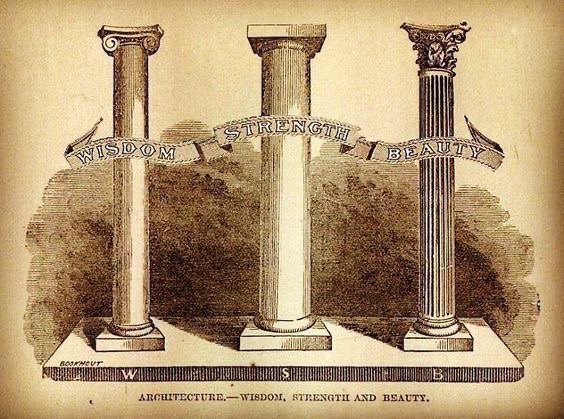
The Holy Temple is balanced. Its walls are steady and beautiful from every angle. The Temple radiates harmony and healing, decorated with the curated artifacts of lived personal experience. Its structure sparkles with cleanliness and integrity, upheld by Ionic, Doric, and Corinthian pillars which represent wisdom, strength, and beauty in perfect proportion.

At the edge of the village, the aspirant builds their Temple from the ground up using their internal guidance system. To onlookers, the process seems strange. What are those materials? Why that floor plan? Why choose that plot of land?

This is reflected in the way that sites of ancient sanctuaries, temples, and even cities were said to have been chosen via “omens” such as lightning strikes or bird flight patterns. The teaching was that “God chooses the place, not the builder.

To those who have not contacted their own inner point of everlasting truth, the Temple and the builder appear odd…until it is finished. 

When the Holy Temple is finally complete, its height…its materials…its undeniable beauty is mesmerizing to the once confused and gossiping onlookers. The truth of the matter is now immediately apparent and attractive. Now, dwelling within the finished structure, the Temple Master sits in command of their surroundings, unthreatened by storms, winds, or the footsteps of passersby. The integrity of the structure is sound and unaffected by external circumstances. The Temple is fitted with a specially coded lock, one that opens only for the truest seekers with the purest intentions. Any misshapen key fails, and so the Temple becomes a sacred fortress: solid, sovereign, and self-protecting for the builder who labored in truth.

This lock-and-key symbolism is, of course, also a reference to sacred sexuality. It speaks to the feminine aspect and responsibility on this path – her need to be fitted for truth, steady in her own architecture, and capable of discernment. For more on this feminine topic, I highly recommend the work of Claire Nakti.

And just as the house of cards attracts those who delight in ignorance, the Holy Temple calls to those who wish to align their own foundations in truth. To them, the Temple is a distant reminder. It is an invitation to rise.

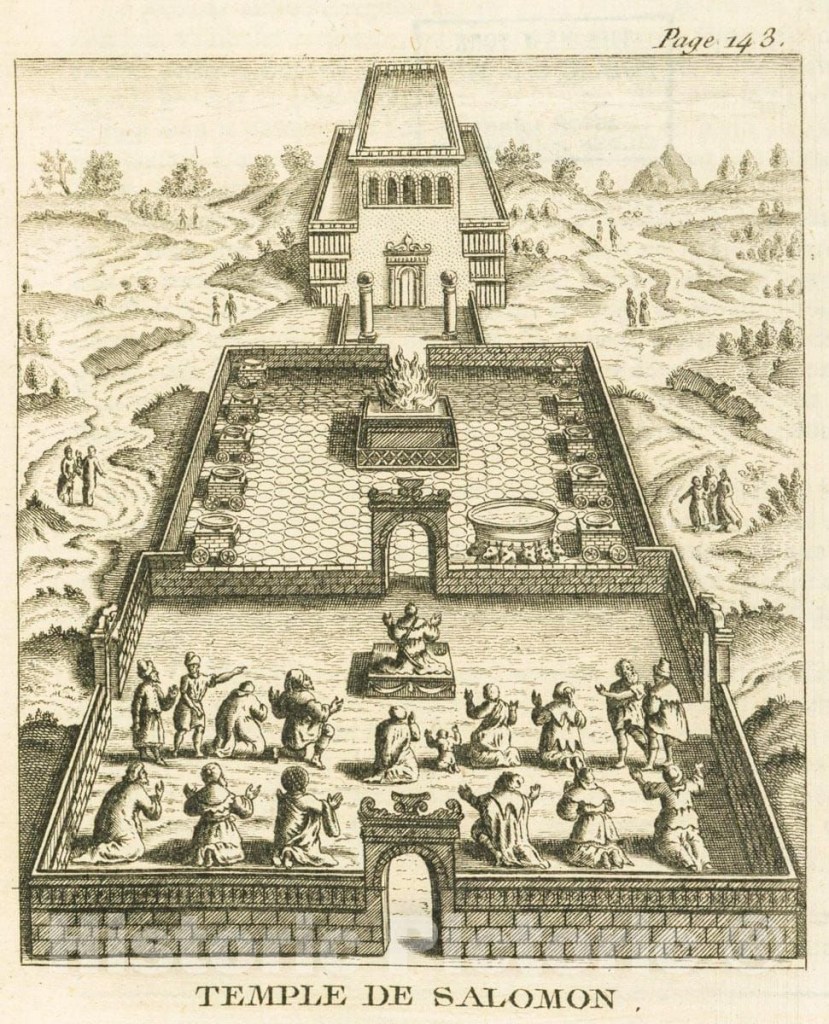
We see this process echoed in the building of King Solomon’s Temple in the Biblical books of 1 Kings and 2 Chronicles. As with all Biblical stories, we can learn the allegorical, metaphorical, and mythological message within the parables. In the narrative, Solomon does not design the Temple himself; he receives the plans from his father, David, who received them from God. This transmission from God to David to Solomon, is a symbolic depiction of DNA genetic patterning. Solomon receives the plans through his father because this is how exoteric teachings point toward an esoteric truth without revealing it outright to be distorted by the spiritually profane. 

Note: I only share the Bible verses below to show that the scriptures of Abrahamic exoteric religions point to esoteric truths using allegorical language and etymological symbolism. The outright words and public rituals are for mass consumption (such as during Catholic “mass”), and so are useful in that context. It is important that those who may be oriented into these traditions go deeper into the teachings in order to avoid being caught up in surface-level understanding. For this in particular, I recommend the teachings of Manly P. Hall.

📜1 Chronicles 28:11–19 (King James Version)

11 Then David gave to Solomon his son the pattern of the porch, and of the houses thereof, and of the treasuries thereof, and of the upper chambers thereof, and of the inner parlours thereof, and of the place of the mercy seat,
12 And the pattern of all that he had by the spirit, for the courts of the house of the Lord…
18 …and for the chariot of the cherubims…
19 All this, said David, the Lord made me understand in writing by his hand upon me, even all the works of this pattern.

Notice the repeated use of the word “pattern.” I discussed the etymology of this word further in another post: 🍦here.

Certain spiritual ideologies expand on this idea by translating the construction of Solomon’s Temple into the process of perfecting the human energetic system, physical body, and soul. The emphasis on craftsmanship, geometry, and the sacred tools of measurement are used to guide the process of self-refinement.

Square: moral integrity
Compass: spiritual guidance and sacred boundaries
Level: inner equilibrium
Plumb line: uprightness and alignment with truth

These symbols remind us that a Temple (outer or inner) cannot be built or accessed without spiritual discipline, discernment, and a steady devotion to the blueprint placed within us. This is the same truth I wrote about earlier in this essay: each of us has a unique Divine blueprint. The actions required to build this Holy Temple can appear strange to others, because often the required actions will place us outside of traditional conformity and societal conditioning. When we follow Divine impulse, we act from a place of deep, wordless knowing. The fruits of that knowing often emerge only later, shaped by our faithfulness to the instructions we received long before we fully understood them.

”LOYALTY TO A UNIQUE CHARACTER” is written in Latin across the top of this document. Pulled from “General Ahiman Rezon and Freemason’s Guide.”

Go back

Your message has been sent

Rating(required)
Warning

🧶The Entwining of Consciousness

A diptych is a two-sided altarpiece. One side depicts a deity or sacred scene, the other presents something more earthly, such as a self-portrait, an ancestor, or an influential figure like a patriarch or monarch.  The two panels are bound together by a hinge or spine, much like a book or a locket. Historically, diptychs (unlike the larger triptychs used for liturgical altars) were placed upon personal shrines within the home. During the late Medieval Ages and the early Renaissance era especially, commissioning a “donor portrait” diptych was common. These works of art represent, whether consciously or subconsciously, the seeker’s desire to fuse with the Divine. 


The Wilton Diptych, c. 1395-1399, displayed at the National Gallery in London. Commissioned by and depicting King Richard the 2nd on the left, and the Virgin with Child on the right.

The hinge of the diptych is both utilitarian and symbolic. Outwardly it’s just a joint, but symbolically it represents the “axis mundi.” It is the same motif we see in myths of a central pillar where heaven and earth meet. Specifically, I will be exploring the Nordic myth of Odin and the tree Yggdrasil below. In esoteric anatomy, this axis is the human spine: The subtle corridor where instinct can be transformed into insight and the Divine descends into form.

Placing a diptych on an altar is a physical reenactment of an inner reality. One side shows the Divine, the other the human, and the hinge becomes the meeting-point between them. It is the place where consciousness can move upward or downward without severing itself from the body. Like the nervous system itself, the “hinge” keeps us anchored while we reach upward. It prevents the seeker from dissolving entirely into transcendence, and instead supports the weaving of the heavenly and the earthly. The diptych becomes a symbolic mirror of this inner ascent, showing how human consciousness joins with Divine consciousness through a shared axis. This movement is an internal anointing: a rising, consecrating current within the subtle body.

Exoteric religions echo this inner process through outward sacraments. In Catholicism, a consecrated oil is placed on the forehead of worshippers as a sign of blessing. This is a symbolic reflection of an esoteric secret that happens within. The “inner oil” is a subtle essence recognized across spiritual traditions, it gathers and rises through the spinal channel, enlivening centers of perception as it ascends.

Even the Catholic term “chrism” reveals this esoteric heritage: it is related to Christos, “the anointed one,” and literally translates to “oil.” What is enacted externally as ritual anointing is a representation of the inner refinement and elevation of one’s own subtle essence.

 It is the sacred elixir:

  • the milk-and-honey fluid of the mystics
  • the Shekhinah descending and rising
  • the serpent-fire of the yogis
  • the pneuma carried up the ladder of Jacob’s dream

As the internal chrism rises, it anoints the brain (the inner temple) and opens the higher centers of vision and gnosis. This is how the seeker moves from belief to knowledge, from worship to union. Thus, the spine is the metaphysical hinge through which human consciousness weaves itself with Divine Will.

This ascent is the basis of many mythological journeys. For example, in the Nordic myth of Odin and Yggdrasil, Odin sacrifices himself by hanging himself upside down on the tree (named Yggdrasil) for nine nights. He does this so that he may gain the knowledge of the Nordic Runes. The understanding is that in order to properly intuit Divine knowledge (rather than be spun off into delusion), one must purify themselves. This myth is a good example of the internal annointing because Odin is hanging upside down, which mimicks the act of raising of the inner chrism.

The “Ascent Myth” follows this pattern:

  1. A lower world: Ordinary consciousness, instinct, matter
  2. A middle journey: Trials, purification, initiation
  3. A pinnacle or summit: Revelation, union with the divine
  4. A return: The enlightened hero re-enters the world transformed

This motif mirrors the movement of energy up the spine, from lower instincts to higher perception and finally to Divine union. The spine has 33 embryonic vertebrae, which alludes to why this number is used in certain fraternities to denote a “rise” in rank amongst one’s fellows.

The Feminine and The Masculine

Although the ascent of the chrism is a universal mechanism, the masculine and feminine bodies conduct this ascent in different ways. These differences are not oppositional but complementary expressions of the same spiritual physics. This is why we see symbolism in the form of the sun/moon or fire/water. 

In the masculine form, the generative essence gathers like pressure. It behaves alchemically like steam building within a sealed vessel: focused, upward-driving, and linear. This is why Hermetic texts describe the masculine path as the “fire rising.” It is the solar current that pushes toward illumination through intensity and disciplined direction. When conserved and sublimated, this pressure moves through the spinal axis as a concentrated surge. 

In the feminine form, the same essence does not accumulate as pressure but diffuses as luminosity. It spreads through the subtle body like light filling a chamber, illuminating her inner space before rising higher. The feminine stores life‑force in a more distributed, oceanic way; therefore, her spiritual ascent is not a push but a glow. It brightens the womb, the heart, and the imaginal centers before lifting toward the crown. The internal tide of intuition rises not through force but through fullness. Women are inherently generative and naturally retain more essence; because of this, she can often achieve this ascent without the same strict conservation required of a male aspirant. The ascent can feel spontaneous, almost trancelike, as she channels connections, ideas, or inspiration for art and poetry (her unique interests are a reflection of her own personal essence, genetic inheritances, and Will) — manifesting works that seem to emerge from a source larger than herself, flowing naturally from the wellspring of her preserved essence.

When this life-force is preserved (through purity of input, rest, love, intention, lowered overstimulation), its substance becomes the raw material of inspiration itself. It refines into completely unique ideas, concepts, inventions, and art. These creations are as singular and unique as a fingerprint. This is because the same generative essence that produces physical life (via pregnancy), when redirected inward, produces physical rejuvenation, as well as psychicintellectual, and spiritual life. The life-giving essence is the same; only the direction changes. 

The diptych is a medieval spiritual device and its impact depends on how it is used. Through spiritual fidelity and consistency, we invite the Divine to enter and reshape our awareness. With pure intention, even the most modest object can reveal profound treasures to the worthy, truth-loving aspirant. When regarded merely as decoration, it may yield only ephemeral wisps of wisdom. When viewed as a symbol of our desire to weave our consciousness with the Divine, the diptych can inspire devotion to our internal ascent.

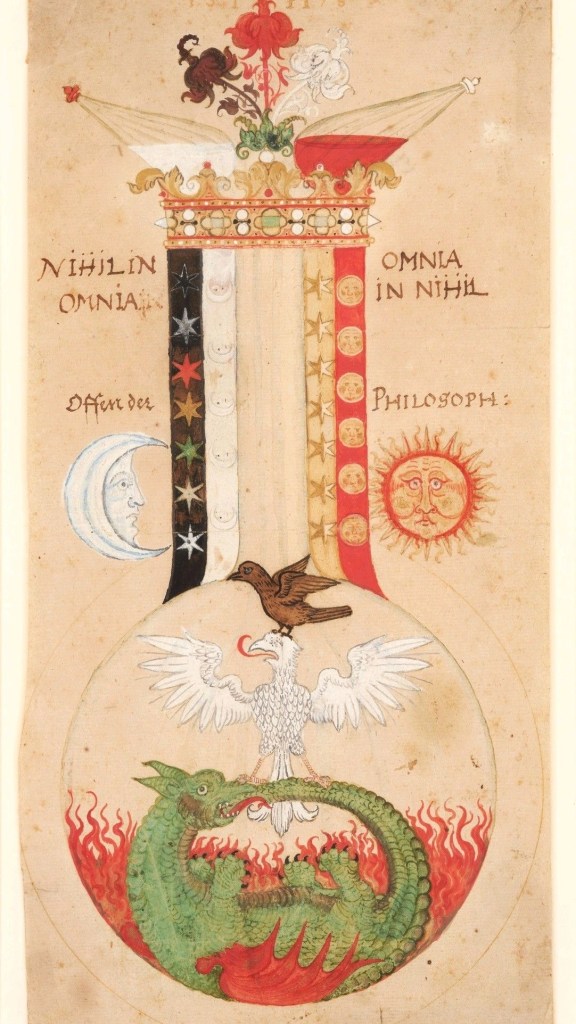
A page from the Aurora Consurgens, a Medieval alchemical manuscript. It uses visual symbolism to convey this mystery.

Go back

Your message has been sent

Rating(required)
Warning