🧶The Entwining of Consciousness

A diptych is a two-sided altarpiece. One side depicts a deity or sacred scene, the other presents something more earthly, such as a self-portrait, an ancestor, or an influential figure like a patriarch or monarch.  The two panels are bound together by a hinge or spine, much like a book or a locket. Historically, diptychs (unlike the larger triptychs used for liturgical altars) were placed upon personal shrines within the home. During the late Medieval Ages and the early Renaissance era especially, commissioning a “donor portrait” diptych was common. These works of art represent, whether consciously or subconsciously, the seeker’s desire to fuse with the Divine. 


The Wilton Diptych, c. 1395-1399, displayed at the National Gallery in London. Commissioned by and depicting King Richard the 2nd on the left, and the Virgin with Child on the right.

The hinge of the diptych is both utilitarian and symbolic. Outwardly it’s just a joint, but symbolically it represents the “axis mundi.” It is the same motif we see in myths of a central pillar where heaven and earth meet. Specifically, I will be exploring the Nordic myth of Odin and the tree Yggdrasil below. In esoteric anatomy, this axis is the human spine: The subtle corridor where instinct can be transformed into insight and the Divine descends into form.

Placing a diptych on an altar is a physical reenactment of an inner reality. One side shows the Divine, the other the human, and the hinge becomes the meeting-point between them. It is the place where consciousness can move upward or downward without severing itself from the body. Like the nervous system itself, the “hinge” keeps us anchored while we reach upward. It prevents the seeker from dissolving entirely into transcendence, and instead supports the weaving of the heavenly and the earthly. The diptych becomes a symbolic mirror of this inner ascent, showing how human consciousness joins with Divine consciousness through a shared axis. This movement is an internal anointing: a rising, consecrating current within the subtle body.

Exoteric religions echo this inner process through outward sacraments. In Catholicism, a consecrated oil is placed on the forehead of worshippers as a sign of blessing. This is a symbolic reflection of an esoteric secret that happens within. The “inner oil” is a subtle essence recognized across spiritual traditions, it gathers and rises through the spinal channel, enlivening centers of perception as it ascends.

Even the Catholic term “chrism” reveals this esoteric heritage: it is related to Christos, “the anointed one,” and literally translates to “oil.” What is enacted externally as ritual anointing is a representation of the inner refinement and elevation of one’s own subtle essence.

 It is the sacred elixir:

  • the milk-and-honey fluid of the mystics
  • the Shekhinah descending and rising
  • the serpent-fire of the yogis
  • the pneuma carried up the ladder of Jacob’s dream

As the internal chrism rises, it anoints the brain (the inner temple) and opens the higher centers of vision and gnosis. This is how the seeker moves from belief to knowledge, from worship to union. Thus, the spine is the metaphysical hinge through which human consciousness weaves itself with Divine Will.

This ascent is the basis of many mythological journeys. For example, in the Nordic myth of Odin and Yggdrasil, Odin sacrifices himself by hanging himself upside down on the tree (named Yggdrasil) for nine nights. He does this so that he may gain the knowledge of the Nordic Runes. The understanding is that in order to properly intuit Divine knowledge (rather than be spun off into delusion), one must purify themselves. This myth is a good example of the internal annointing because Odin is hanging upside down, which mimicks the act of raising of the inner chrism.

The “Ascent Myth” follows this pattern:

  1. A lower world: Ordinary consciousness, instinct, matter
  2. A middle journey: Trials, purification, initiation
  3. A pinnacle or summit: Revelation, union with the divine
  4. A return: The enlightened hero re-enters the world transformed

This motif mirrors the movement of energy up the spine, from lower instincts to higher perception and finally to Divine union. The spine has 33 embryonic vertebrae, which alludes to why this number is used in certain fraternities to denote a “rise” in rank amongst one’s fellows.

The Feminine and The Masculine

Although the ascent of the chrism is a universal mechanism, the masculine and feminine bodies conduct this ascent in different ways. These differences are not oppositional but complementary expressions of the same spiritual physics. This is why we see symbolism in the form of the sun/moon or fire/water. 

In the masculine form, the generative essence gathers like pressure. It behaves alchemically like steam building within a sealed vessel: focused, upward-driving, and linear. This is why Hermetic texts describe the masculine path as the “fire rising.” It is the solar current that pushes toward illumination through intensity and disciplined direction. When conserved and sublimated, this pressure moves through the spinal axis as a concentrated surge. 

In the feminine form, the same essence does not accumulate as pressure but diffuses as luminosity. It spreads through the subtle body like light filling a chamber, illuminating her inner space before rising higher. The feminine stores life‑force in a more distributed, oceanic way; therefore, her spiritual ascent is not a push but a glow. It brightens the womb, the heart, and the imaginal centers before lifting toward the crown. The internal tide of intuition rises not through force but through fullness. Women are inherently generative and naturally retain more essence; because of this, she can often achieve this ascent without the same strict conservation required of a male aspirant. The ascent can feel spontaneous, almost trancelike, as she channels connections, ideas, or inspiration for art and poetry (her unique interests are a reflection of her own personal essence, genetic inheritances, and Will) — manifesting works that seem to emerge from a source larger than herself, flowing naturally from the wellspring of her preserved essence.

When this life-force is preserved (through purity of input, rest, love, intention, lowered overstimulation), its substance becomes the raw material of inspiration itself. It refines into completely unique ideas, concepts, inventions, and art. These creations are as singular and unique as a fingerprint. This is because the same generative essence that produces physical life (via pregnancy), when redirected inward, produces physical rejuvenation, as well as psychicintellectual, and spiritual life. The life-giving essence is the same; only the direction changes. 

The diptych is a medieval spiritual device and its impact depends on how it is used. Through spiritual fidelity and consistency, we invite the Divine to enter and reshape our awareness. With pure intention, even the most modest object can reveal profound treasures to the worthy, truth-loving aspirant. When regarded merely as decoration, it may yield only ephemeral wisps of wisdom. When viewed as a symbol of our desire to weave our consciousness with the Divine, the diptych can inspire devotion to our internal ascent.
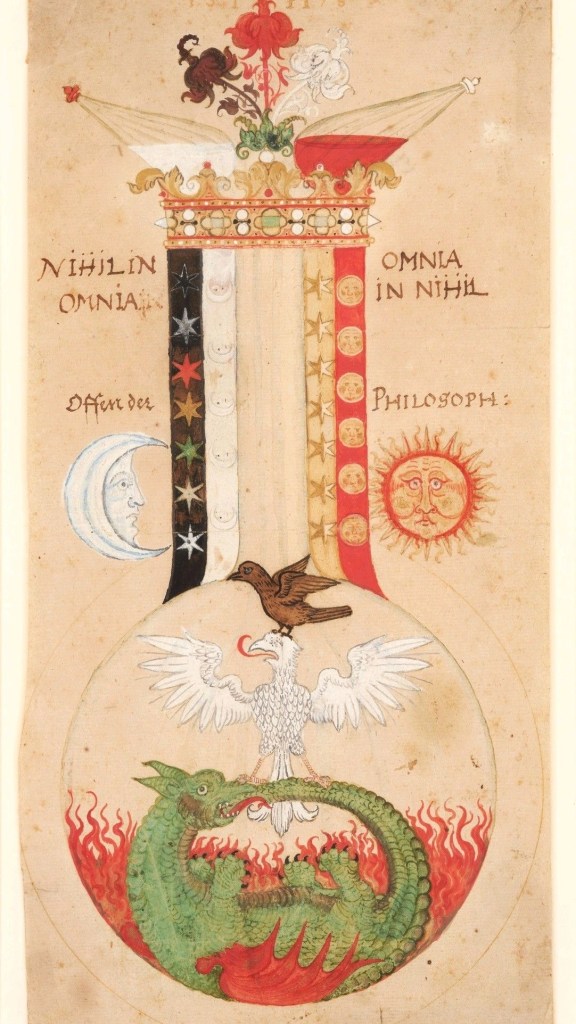
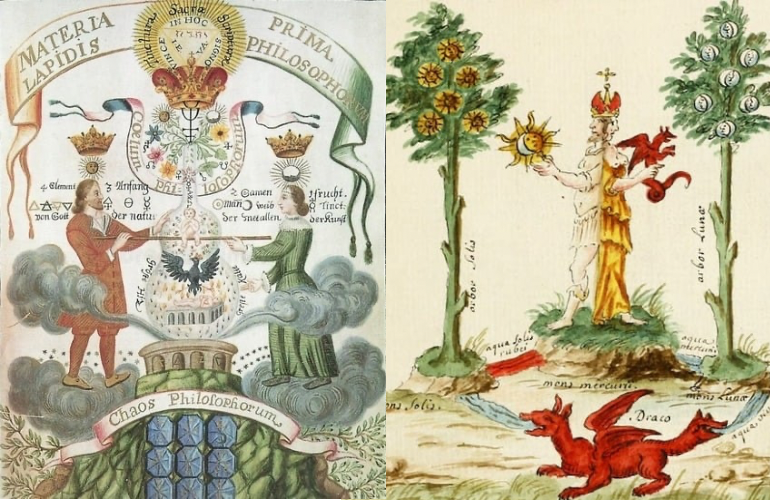
A page from the Aurora Consurgens, a Medieval alchemical manuscript. It uses visual symbolism to convey this mystery.

Go back

Your message has been sent

Rating(required)
Warning

🍦On the Development of Good Taste

The following is the extended version of a caption I posted on Instagram today. There is a character limit on that platform and I had to omit some of the original text. Find it in totality below:

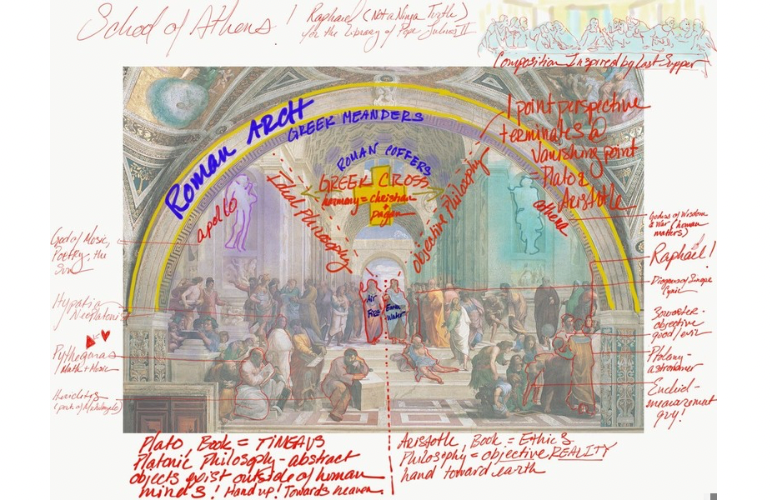
“Good taste” emerges from the two foundational qualities of discernment and aesthetic judgment. These qualities simultaneously sharpen the eye and refine the spirit. Through them, beauty becomes something we can learn to recognize rather than something we merely prefer and call “personal preference.” To gain aesthetic intelligence, we study both symmetry and anomaly in order to achieve a sense of context. Knowledge of symmetry allows one to recognize when something is out of alignment. Knowledge of anomaly helps one identify exactly what is out of place. Symmetry is a matter of mathematical proportion and is the physical representation of universal truth. For this reason, symmetry creates objective beauty. Humanity introduces deviation. Emotion introduces asymmetry. Evolution introduces variation. If we want to understand symmetry as Divine truth, we look to the Renaissance Masters and classical architecture. If we seek emotion, imagination or subjectivity, we look to modern art. This is why, on page 91 of my poetry book Slow Motion, I wrote, “Don’t look at modern art.” It was a playful exaggeration expressing this idea. I have shared this poem here:

Don’t glorify the future
Don’t look at modern art
The techniques of the masters, learn them by heart
Renaissance works still stand when pulled apart

Use the past for a proper frame of reference
Not these confounding scribbles on a digital canvas
Only a return to the truth can save us

Goddess, save the art world
God, save us from the screen
-art save the artist from the modernity scheme


In ancient times, symmetrical art and architecture were understood as a form of medicine. To gaze upon perfected form was considered therapeutic, a way of restoring inner harmony through outer harmony. Today, we readily accept that sound can heal—hymns, chants, certain frequencies, binaural tones—yet we have largely forgotten the healing power of symmetry itself. We recognize vibrational medicine in music but overlook the mathematics of beauty as a parallel form of spiritual alignment.

This is distinctly different from what many describe as “healing” through splattering paint or releasing emotion onto a canvas. Such methods are practices of emotional transmutation, valid in their own category, but unrelated to what I am referring to. What I am pointing to is the quiet, corrective effect of merely beholding art or architecture that carries divine proportion. Modern art, with its emphasis on emotion, spontaneity, and imprecision, serves a different function entirely.


⚖️ The first step in cultivating good taste is to immerse the mind in symmetrical perfection. Discernment then develops as an internal system of metrics, created through observation and reflection. This internal vetting naturally shapes our aesthetic judgment. It becomes a silent instrument of measure. Once this instrument awakens, we begin to recognize mathematical cohesion immediately, and a taste for this recognition emerges. What reflects proportion reflects truth, and those who are aligned with this truth instinctively resonate with it. This is why the word “integrity” refers both to structural soundness and to alignment with truth. And why the word “sound” itself is used to describe a “state of being in good condition, the quality of being based on valid reason or good judgment” and also “vibrations that travel through the air and can be heard once they reach the ear.

Integrity, proportion, and beauty mirror a metaphysical pattern, the Platonic Form of order that underlies both art and existence. This connection alludes to the mysteries of fraternal societies that symbolically use the jargon of masonry to guide spiritual initiates. 🛠️


“Pattern” is the directive masculine principle, and matter itself is the receptive feminine principle. To quote Goethe, who said, “Architecture is frozen music,” vibration becomes form when pattern impresses itself upon matter, translating harmony into geometric structure. The masculine embodies, enacts, and impresses the pattern. The feminine is the substance upon which the pattern is received and revealed. The word “pattern” is etymologically rooted in “pater,” or father/patron/protector, while “matter” is rooted in “mater,” or mother/material/matrix. The word “matrix” literally translating to “womb” or “breeding female.” The interaction of pattern and matter reflects the sacred act of creation. To develop good taste is to consciously participate in this mystery, to train the senses toward the architecture of the Divine. 

Go back

Your message has been sent

Rating(required)
Warning

Second Annual THIS VEGAN LIFE Gift Guide

This may be more of a “my favorite things” roundup versus an actual gift guide. But, if you have someone in your life (maybe even you personally) who is obsessed with yoga, all things vegan, reading, and metaphysical science – you have come to the right place.

Let’s see.

Lululemon Leggings: Don’t get lost in the many legging options, my all time favorite is the Wunder Under Hi-Rise Tight in FULL ON LUXTREAM. I own three pairs of this particular legging, in different colors. The high waist is perfect for pairing with cropped work-out tops. Lululemon also makes this legging in a different fabric called Luon, but the Luxtream is far better for practicing yoga. There are no extra pockets on the legs or zippers, making it great for rolling around on the mat. Shop here.

Screen Shot 2017-12-15 at 7.53.47 PM

Gorjana Power Gemstone Bracelets: These beautiful bracelets are made with real crystals -everything from Aventurine to Onyx. Read through the description of each stone to find the specific bracelet that resonates with you. Maybe it’s Garnet for revitalizing your energy levels or Amethyst for tranquility. Shop here.

Screen Shot 2017-12-15 at 7.36.33 PM

DermaE Skincare: I feel like I’ve hacked the world with this little secret.  I have started mixing my body lotion with a serum. We take utmost care of the skin on our faces and necks, why stop there? After getting out of the shower, I will dispense a few pumps of the Vitamin C Concentrated Serum into my hand to combine with my body lotion. It is hard to choose a favorite DermaE product, because their line is so wonderfully inclusive. I advise navigating their website using the “Shop By” tab – from there you can shop by Key Ingredient or Skin Concern. Shop here.

Screen Shot 2017-12-15 at 7.35.47 PM

Books: Here is a list of links to my favorite books of 2017.

Sunbeam Velvet Plush Heated Throw: Imagine an incredibly soft blanket with the power to spread warmth across your entire body with the click of a button. Imagine yourself enjoying a morning cup of Golden Magick Mylk (recipe here) whilst cuddled into said blanket. Make these musings a reality with this perfect electric blanket (which comes in a variety of colors). Shop here. Screen Shot 2017-12-15 at 7.42.56 PMGovinda Premium Palo Santo Sticks: This particular brand sources their sticks directly from Peru. I prefer these sticks to other energy clearing mechanisms because they are outrageously easy to re-light. Unlike my experience with sage bundles, you can actually reuse Palo Santo multiple times. Shop here.

Screen Shot 2017-12-15 at 7.35.22 PM

Angela Roi Vegan Leather Handbags: I own the Grace Cross-Body in the color russet. Having owned and used other high end vegan bags, I can confidently say that Angela Roi is my favorite. Fashionable and ethical, the brand doesn’t support animal cruelty OR sweatshop labor. If you are looking for quality and style similar to Tory Burch, but cruelty free – look no further. Shop here.

Secret-In-A-Tube Lipgloss: Kiss with confidence, not toxins (I love their slogan!) – but truly, who wants to slather their lips with chemicals? These glosses are 100% vegan, cruelty free, gluten free and organic. My personal favorite color is called Lit. It is a rich blackberry color; perfect to wear into the new year.  Shop here.

Jade Yoga Harmony Mat: This has been my mat for the past two years of practicing. I have the teal color. Jade mats are made in a sustainable manner with natural rubber tapped from rubber trees, a renewable resource. Unlike other mats, Jade mats contain no PVC, EVA or other synthetic rubber, and are made in the United States in compliance with all US environmental, labor and consumer protection laws. And, through our partnership with Trees for the Future, JADE PLANTS A TREE FOR EVERY MAT SOLD – with over ONE MILLION trees planted so far. Shop here.

Screen Shot 2017-12-15 at 7.50.40 PM

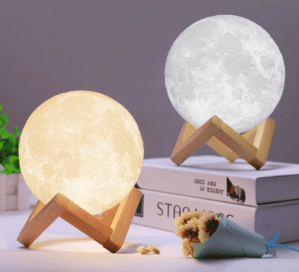
Magical Moon Lamp: If you love the ambiance of a salt lamp, you may enjoy a similar feel from these moon lamps. Great to have on during a meditation session to set the mood. Shop here.

Screen Shot 2017-12-15 at 7.52.16 PM

Signoff

Go back

Your message has been sent

Rating(required)
Warning